Sunday, February 27, 2022

Hour of the Witch

Title:
  Hour of the Witch
Author:  Chris Bohjalian
Publication Information:  Doubleday. 2021. 416 pages.
ISBN:  0385542437 / 978-0385542432

Book Source:  I received this book through NetGalley free of cost in exchange for an honest review.

Opening Sentence:  "It was always possible that the Devil was present."

Favorite Quote:  "There were  people in the world who were good and people who were evil, but most of them were some mixture of both and did what they did simply because they were mortal. And her Lord? ... He knew it all and had known it all and always would know it all."

A young woman. An only daughter. An educated woman. An abusive marriage. No children. An appeal for divorce. A Puritan town looking for signs of anyone breaking tradition and anyone different. A charge of witchcraft.

This is Mary Deerfield's life in 1600s Boston. She and her family arrive in Boston when Mary is a teenager. Her father is a respected and wealthy businessman - a shipper and an importer of goods. Mary tries to play by the rules. She is a dutiful daughter. She is dutiful wife, hiding evidence of her husband's abuse. Yet, her power of independent thinking does not go well in this town. That combined with Mary's supposed friendship with suspicious persons - a supposed witch and a man who is not her husband - lead to suspicions about Mary herself. She pushes the boundary even further when escalating abuse causes her to file a petition of divorce from her husband. The issue escalates even more so when a series of circumstances lead to an accusation of witchcraft.

This book has all the elements I love about Chris Bohjalian's books. The history is researched and real. According to author interviews, the idea for this book originated in the case of Katherine Nanny Naylor in front of the Boston Court of Assistants in 1672. The case stands out because Nanny Naylor filed for and was able to win a divorce from her husband. She spend the rest of her life living independently. The records of the case can still be found in the Massachusetts Archives Collection. Interestingly, in 1992, archeologists discovered the privy of her home in Boston. Because of the wealth of artifacts found in the privy, the discovery is considered one of the most significant ones from the early colonial period.

Fascinating history aside, the book is at the same time fiction and tells a story that keeps me rapidly turning pages from beginning to the end. The characters - especially Mary herself - are well drawn and the history is so brought to life through them that I think surely, they must be real themselves. The one thing I could have done without is Mary's repeated thoughts about men and about sexual pleasure. For me, that distracts from the story about Mary's rise as a woman.

What I might expect of this book is the story of Puritan New England and a male dominated society. Yet, this book is really the story of the women. It is about the individual strength of Mary herself. It is also about the women who surround her - those who would tear each other down and those who would lift each other up.

By the nature of the time and place, the men play key, visible roles. "This may be the hour of the witch. But the Devil? He most definitely wears breeches. The Devil can only be a man." However, it is the women on whom the story and its final conclusion rests.

The epilogue ending was what I expected given the times. However, I do wish the book had ended with the strength of the women without that add on.


Please share your thoughts and leave a comment. I would love to "talk" to you.

Friday, February 18, 2022

Colorful

Title:
  Colorful
Author:  Eto Mori
Publication Information:  Counterpoint. 2021. 224 pages.
ISBN:  1640094423 / 978-1640094420

Book Source:  I received this book through NetGalley free of cost in exchange for an honest review.

Opening Sentence:  "As my dead soul leisurely drifted off to some dark place, this angers I'd never seen before suddenly appeared right in my way."

Favorite Quote:  "Extraordinary joy and sadness can come out of the ordinary every day."

A nameless young individual dies. His soul drifts towards the afterlife and the cycle of rebirth. An angel named Prapura notifies him that he has won the lottery. Because of his actions during his life, this individual is about to be kicked out of the cycle of rebirth. The soul is to be no more. However, due to the decision of the "boss," he is being given a second chance. He is to be given a "homestay" in another body. There he stays until he can determine what grave error he made in his own life.

The host body is fourteen-year-old Makoto Kobayashi. He has just killed himself, but due to the chance given to this nameless soul, is brought back to life. Now, this soul has to live as Makoto while determining what went wrong in his own life. Surrounding Makato are his parents, his older brother, and his school mates.

So begins this journey of self- discovery. Although marketed as literature and fiction, this book has very much of a young adult feel. The conclusion of the book is just what I expect it to be. The lesson is just what I expect it to be. "It wasn't some simple change, like things that I thought were black were actually white. It was more like when I looked closely, things I thought were a single, uniform color were really made up of a bunch of different colors. That's maybe the best way to describe it."

The journey of self-discovery also becomes a journey of learning about those who surround us. So often in our lives, we take for granted those closest to us and see what we choose to see. The soul in Makato's body learns this lesson about his family and his school mates.

The young-adult feel of the book comes from how simplified issues such as suicide, mental health, ethics, and infidelity seem to be. The resolutions to these issues seems equally simplified. In many ways, this is a self-help book with a lesson that appears easy to state but is so challenging to implement. "Remember how it felt to move freely without trapping yourself in your own expectations." The books appears to gloss over the challenges.

The biggest issue I have with the book does not even center on the main character, but rather on a girl who he cares about. The book, in a matter of fact way, presents an eight-grader prostituting herself so that she can buy things! "Pretty clothes, bags, rings, all those nice things I want are super expensive. Even if I tried to save  up my allowance, okay. even if I saved up for a whole year, I could never buy any of them ... But if I do it with him three or four times, boom, I can buy whatever I want." This is something I just cannot see past. The fact that the girl has an allowance indicates an economic level and a home life. But prostitution! The fact that I feel this book has a young adult audience makes this statement worse. The fact that is presented matter of factly and then not addressed again makes it worse and beyond my understanding. The fact that this being the reason for rejection of Makato is somewhat tangential to Makato's story makes it worse. Teenage angst over an unrequited love alone is enough. Why add this twist to the mix?

The original Japanese book won the Sankei Children's Book Award when originally published in the 1990s; it has been made into multiple movies. The fact that it won a Children's book award makes the subject matter even less palatable. Let's just say I do not understand.


Please share your thoughts and leave a comment. I would love to "talk" to you.

Saturday, February 12, 2022

Clean Air

Clean Air
Title:
  Clean Air
Author:  Sarah Blake
Publication Information:  Algonquin Books. 2022. 320 pages.
ISBN:  1643751069 / 978-1643751061

Book Source:  I received this book through NetGalley and a publisher's blog tour free of cost in exchange for an honest review.

Opening Sentence:  "Dear Cami, We couldn't breathe the air."

Favorite Quote:  "The Turning was ten years ago. That's how people talked about it. Though it took more than that year for the world to experience the full effect of it, and less than a month for any city or town to all but die off. But it was easier to call it, vaguely, the Turning. TO not recall which month took which town. To let it slip out of time. To let it become the generic past tragedy of the world."

***** BLOG TOUR *****


Review

The time is in future but not too far in the future - the 2030s or perhaps the 2040s. The world is in a post-apocalyptic new age in which humanity has learned to fight and survive the climate crisis. However, it is not an apocalypse of rising temperatures, rising seas, and the disappearing ozone layer. Rather, it is crisis of trees. Yes, trees. The trees have taken over, generating so much pollen so as to render the air unbreathable. That event is known as the Turning.

The world has adapted and restarted life, moving from airtight dome to airtight dome - life existing in literally these bubbles.

Kaito and Izabel remember the Turning. In fact, that was when they met. They survived when so many did not. They even thrived, falling in love and marrying. They are now parents to young Cami, whose entire life has been after the Turning.

Life in the bubble is safe and moving along a planned trajectory. However, the bubble cracks - literally and figuratively. A serial killer is breaking into domes at night, causing people to be exposed to the pollen and to die.

Somehow four year old Cami is involved for she talks about the killings in her sleep. Izabel begins a quest to protect her daughter and figure out the serial killer and the connection to her daughter. The ending, when it comes, is abrupt goes in a direction I don't expect. The environmental aspect I get as a current topic even though the trees being the cause of the apocalypse is somewhat out there. The imaginary world the book  builds conjures the dystopian image. The serial murders introduce the mystery. Yet, the book ends up at magical realism and the supernatural

I don't really get it. The different genres mix together in the book but, for me, do not coalesce into a whole. For me, part of the reason may be that the characters do not become real. Cami is cute but way too precocious for a four year old. Kaito and Izabel seem distant throughout the book. I don't find myself rooting for them or against them. To some extent, I become distant and do not invest in the outcome.

I find the concepts - of the post apocalyptic world, of a serial killer, of a supernatural connection, of a family drama even - intellectually intriguing. The fact that the main character is a mother protecting her child should elicit the emotional reaction. Unfortunately, the characters and story for me fail to elicit that connection that makes me invest in the book. I walk away unsatisfied and not the reader for this one.

About the Author

Sarah Blake’s novel Naamah won the National Jewish Book Award for Debut Fiction. Blake is also the author of the poetry collections Mr. West and Let’s Not Live on Earth. In 2013, she was awarded a literature fellowship from the National Endowment for the Arts. She currently lives in the UK.

About the Book

The climate apocalypse has come and gone, and in the end it wasn't the temperature climbing or the waters rising. It was the trees. They created enough pollen to render the air unbreathable, and the world became overgrown.

In the decades since the event known as the Turning, humanity has rebuilt, and Izabel has grown used to the airtight domes that now contain her life. She raises her young daughter, Cami, and attempts to make peace with her mother's death. She tries hard to be satisfied with this safe, prosperous new world, but instead she just feels stuck.

And then the tranquility of her town is shattered. Someone—a serial killer—starts slashing through the domes at night, exposing people to the deadly pollen. At the same time, Cami begins sleep-talking, having whole conversations about the murders that she doesn't remember after she wakes. Izabel becomes fixated on the killer, on both tracking him down and understanding him. What could compel someone to take so many lives after years dedicated to sheer survival, with society finally flourishing again?


Please share your thoughts and leave a comment. I would love to "talk" to you.

Saturday, February 5, 2022

A Lullaby for Witches

A Lullaby for Witches
Title:
  A Lullaby for Witches
Author:  Hester Fox
Publication Information:  Graydon House. 2022. 320 pages.
ISBN:  1525804693 / 978-1525804694

Book Source:  I received this book through NetGalley and the HTP Winter 2022 historical fiction blog tour free of cost in exchange for an honest review.

Opening Sentence:  "I was beautiful in the summer of 1876."

Favorite Quote:  "Here is what I know to be true:  we are part of something larger, something more beautiful than we could ever comprehend. During our brief tenure on this earth, we see but only a glimpse of the world around us."

***** BLOG TOUR *****

Review

A Lullaby for Witches is the fourth Hester Fox book that I have read. Unlike the first three, this one does not follow the title of CHARACTER of LOCATION. All main characters are women with an unusual history. All are set in New England. All are gothic with witches and powers and conduits to the beyond. Beyond that, each one has been unique. The Witch of Willow Hall is about a young woman finding her voice. The Widow of Pale Harbor is more romance than anything else. The Orphan of Cemetery Hill is about grave robbing and "scientific" experimentation. This one follows a two time period narrative, with a bridge and connection from past to present. It also features for a brief moment Pale Harbor.

Margaret Harlowe is the past. She is the youngest of the Harlowe children and the only girl. She has powers that, on occasion, she uses for good and, on occasion, to suit her own purposes. The mystery of Margaret Harlowe is the conversation of where she comes from and ultimately where she disappears to. Her ghost lingers at Harlowe House.

August Podos is the present. She takes, what she thinks, is her dream job as a colletctions expert at Harlowe House. Something considerably more personal draws her into life at Harlowe Hall in Tynemouth, Massachusetts.

The chapter alternate perspectives between the two women. Many parallels emerge - the discord within family, the betrayal by a man, and the sense of not belonging. "Do you know what it is to be lonely? Truly alone, even amidst a crowd? Even in a family?" 

Yet, at the same time, the two women could not be more different. Margaret's intentions are clear from the beginning to the reader. Margaret's story becomes about discovering why and how. Augusta's story becomes about following to see when she will discovers Margaret's intents and how she will respond. In this too, parallels emerge. The growth in both is the realization and the understanding of their own power. "But what I'm beginning to realize is that I don't need to find myself. I've been here all along." Yet, the two women again could not be more different in the use of their power.

The dual narrative technique work sin this book, and I find both women and their stories intriguing. I want to know the answers to the questions for both. The climax of this book brings the two stories crashing together about as I expect yet the melodramatic conclusion keeps me turning pages to see if it turns out the way I expect it will. The epilogue is an unexpected surprise for it answers the unasked question from the beginning. Why will Margaret Harlowe never leave this house? Don't you want to know?

As a random aside, the book does have a math mistake. The first sentence in the book states the year as 1876. At one point, a statement is made, "I've though about you these one hundred and fifty years." That would make the present time 2026! This book is in no way futuristics but rather anchored firmly in the past. This makes no difference to my enjoyment of the story, but I am a number person, notices, and found  it interesting.

About the Author

Hester Fox is a full-time writer and mother, with a background in museum work and historical archaeology. A native New-Englander, she now lives in rural Virginia with her husband and their son.

About the Book

Augusta Podos has just landed her dream job, working in collections at a local museum, Harlowe House, located in the charming seaside town of Tynemouth, Massachussetts. Determined to tell the stories of the local community, she throws herself into her work--and finds an oblique mention of a mysterious woman, Margaret, who may have been part of the Harlowe family, but is reduced to a footnote. Fascinated by this strange omission, Augusta becomes obsessed with discovering who Margaret was, what happened to her, and why her family scrubbed her from historical records. But as she does, strange incidents begin plaguing Harlowe House and Augusta herself. Are they connected with Margaret, and what do they mean?

Tynemouth, 1872. Margaret Harlowe is the beautiful daughter of a wealthy shipping family, and she should have many prospects--but her fascination with herbs and spellwork has made her a pariah, with whispers of "witch" dogging her steps. Increasingly drawn to the darker, forbidden practices of her craft, Margaret finds herself caught up with a local man, Jack Pryce, and the temptation of these darker ways threatens to pull her under completely.

As the incidents in the present day escalate, Augusta finds herself drawn more and more deeply into Margaret's world, and a shocking revelation sheds further light on Margaret and Augusta's shared past. And as Margaret's sinister purpose becomes clear, Augusta must uncover the secret of Margaret's fate--before the woman who calls to her across the centuries claims Augusta's own life.

Excerpt 

Excerpted from A Lullaby for Witches by Hester Fox, Copyright © 2022 by Hester Fox. Published by arrangement with Harlequin Books S.A.

Prologue
Margaret

I was beautiful in the summer of 1876. The rocky Tynemouth coast was an easy place to be beautiful, though, with a fresh salt breeze that brought roses to my cheeks and sun that warmed my long hair, shooting the chestnut brown through with rich veins of copper. It was enough to make me forget—or at least, not care—that I was an outsider, a curiosity who left whispers in my wake when I walked through the muddy streets of our coastal town.

Do I miss being beautiful? Of course. But it’s the being found beautiful by others that I miss the most. It was the ambrosia that made an otherwise solitary life bearable. And it was being found beautiful by one man in particular, Jack Pryce, that I miss the most.

He would come to find me out behind my family’s house as I helped our maid hang the laundry on the lines or weeded my rocky garden. He always brought me a little gift, whether it was a toffee wrapped in wax paper from his parents’ shop, or just a little green flower he had plucked because it reminded him of my eyes. Something that told me I was special, that those stories around town of him stepping out with the Clerkenwell girl weren’t true.

“There she is,” he would say, coming up with his hands in his pockets and crooked grin on his full lips. “My lovely wildflower.” He called me this, he said, on account of my insistence on going without shoes on warm days when the grass was soft and lush. Whatever little chore I was doing would soon be forgotten as I led him out of sight of the house. With my back against a tree and his hands traveling under and up my skirts, we found euphoria in a panting tangle of limbs and hoarsely whispered promises. Heavy sea mists mingling with sweat in hair (his), the taste of berry-sweet lips (mine), the gut-deep knowing that he must love me. He must. He must. He must.

But like all things, summer came to an end, and autumn swept in with her cruel winds and killing frosts. Jack came less and less often, claiming first that it was work at the shop, then that he could no longer be seen with the girl who was rumored to practice witchcraft and worship at the altar of the moon on clear nights. Finally, on a day where the rain fell in icy sheets and even the screeching cries of the gulls could not compete with the howling wind, I realized he was not coming back.

Time moves differently now. Then, it was measured in church bells and birthdays, clock strokes and town harvest dances. It was measured in the monthly flow of my courses, until they stopped coming and my belly grew distended and full. Now—or perhaps it is better to say “here”—time is a fluid thing, like water that flows in all directions, finding and filling every crack and empty place, like my womb and my heart.

I did not want to give the babe up, though I knew it could only bring heartache and pain to my family. A mother’s heart is a stubborn thing, and no sooner had I felt the first stirrings of life within me, than I knew I would do anything in the world to protect my little one.

It was folly, I know that now. A woman like me could never hope to bring a child into this cruel world, could never hope that the honey-sweet words of a man like Jack Pryce carried any weight. What irony that I should not realize such simple truths until it was too late. Should not realize them until my blood ran icy in my veins and my broken heart stopped beating. Until the man I thought had loved me stood over my body, staring down as the life ran out of me like a streambed running dry. Until I was dead and cold and no longer so very beautiful.

1
Augusta

“Hello?” Augusta threw her keys on the table and slung her bag onto one of the kitchen chairs. As usual, a precarious stack of plates had taken over the sink, and the remnants of a Chinese food dinner sat out on the table. Sighing, she covered the leftovers with plastic wrap, stuck them in the fridge and followed the sounds of video games to the living room.

“I’m home,” she said tersely to the two guys hunched over their gaming consoles.

Doug barely glanced up, but her boyfriend, Chris, threw her a quick glance over his shoulder.

“Hey, we’re just finishing up.” Turning back, he continued mashing keys on the game controller, shaking his dark fringe from his eyes and muttering colorful insults at his opponent.

Chris and Doug weren’t the best housemates. Sure, they paid their share of the rent on time, but the house was constantly a mess, and video games took priority over household chores. She supposed that’s what she got for living with her boyfriend and allowing his unemployed brother to move in with them.

“Well, I guess I’ll be in my room if you need me,” Augusta said, too exhausted to pick a fight about the mess in the kitchen.

“You can stay and watch,” Chris said without turning back around.

She’d had a long, hard day. Between the air-conditioning being broken at work and discovering she only had ninety-eight dollars in her bank account after paying her cell phone bill, she wasn’t in the mood to watch Chris and Doug massacre each other with bazookas. She grabbed an apple from the kitchen, and went back to the room she shared with Chris, closing the door against the sounds of gunfire and explosions. Outside, the occasional car passed by in a sweep of headlights and somewhere down the street a dog barked. Loneliness curled around her as she sat at her laptop and began cycling through her bookmarked job listing sites.

Her job giving tours at the Old City Jail in Salem was all right; she got to work in a historic building, it was close enough that she could walk to work, and the polyester uniform was only a slightly nauseating shade of green. But it wasn’t challenging, and she wasn’t using her degree in museum studies for which she’d worked so hard. Not to mention the student debt she was still paying off. The worst was dealing with the public, though. Some of the people that showed up on her tours were engaged in her talks, but mostly the jail attracted cruise tourists who hadn’t realized that it was a guided tour and were more interested in snapping a quick picture for Instagram than learning about the history. The other day she’d really had to remind a full-grown man that he couldn’t bring an ice cream cone into the house, and then had to clean up said ice cream cone when he’d smuggled it inside anyway and dropped it. And the witches! Just because they were in Salem, everyone who came through the door assumed that there would be history about the witches, never mind that the jail didn’t even date from the same century as the witch trials. Most days she came home tired, irritable and unfulfilled.

From the other room came an excited shout as Chris blew up Doug’s home base. Augusta turned her music up. Most of the listings on the museum job sites were for fundraising or grant writing, the sliver of the museum world where all the money was. She knew she shouldn’t be choosy, the millennial voice of reason in her head telling her that she was lucky to have a job at all. But Chris, with his computer engineering degree, actually had companies courting him, and his job at a Boston tech firm came with a yearly salary and benefits.

She was just about to close her laptop when a new listing popped up. Harlowe House in Tynemouth was looking for a collections manager to work alongside their curator. As she scanned the listing, her heart started to beat faster. She wasn’t familiar with the property, but a quick search showed that it was part of a trust dedicated to the history and legacy of a seafaring family from the nineteenth century. She ticked off the qualifications in her head—an advanced degree in art history, museum studies or anthropology, and at least five years of experience. She would have to fudge the years, but other than that, it was made for her. She bookmarked the listing, making a mental note to update her CV in the morning.

The door swung open and Chris came in, plopping himself on the bed beside her. Tall, with an athletic build and dark hair that was perpetually in need of a trim, he was wearing a faded band shirt and gym shorts. “We’re going to order subs. What do you want?”

“Didn’t you just get Chinese food?” she asked.

“That was lunch.”

Augusta did a quick inventory in her head of what she’d eaten that day, how many calories she was up to, and how much money she could afford. After she’d fished ten dollars out of her purse, Chris wandered back out to the living room, leaving her alone. She picked up a book, but it didn’t hold her interest, and soon she was lost scrolling through her phone and playing some stupid game where you had to match up jewels to clear the board. A thrilling Saturday night if there ever was one.

In both college and grad school, Augusta had had a vibrant, tight-knit group of friends. She’d always been a homebody, so there weren’t lots of wild nights out at clubs, but they’d still had fairly regular get-togethers. Lunches and trips to museums, stuff like that. So what had happened in the last few years?

Her mind knew what had happened, but her heart refused to face the truth. Chris had happened.

She had been with him ever since her dad died. She’d run into Chris, her old high school boyfriend, at the memorial. He’d been a familiar face, and she’d clung to him like a life raft amid the turmoil of putting her life back together without her father. It had been clear early on that beyond some shared history, they didn’t have much in common, but he was steady, and Augusta had craved steady. A year passed, then two, then three, and four. She had invested so much time in the relationship, sacrificed so many friends, that at some point it felt like admitting defeat to break up. For his part, Chris seemed content with the status quo, and so five years later, here they were.

That night, after Chris had rolled over and was lightly snoring, Augusta lay awake, thinking of the job listing. The words Harlowe House, Harlowe House, Harlowe House ran through her mind like the beat of a drum. A signal of hope, a promise of something better.

Buy Links

BookShop.org
Harlequin
Barnes & Noble
Amazon
Books-A-Million
Powell’s

Social Links

Author Website
Twitter: @HesterBFox
Facebook: N/A
Instagram: @hesterbfox
Goodreads


Please share your thoughts and leave a comment. I would love to "talk" to you.

Saturday, January 29, 2022

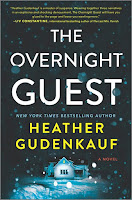
The Overnight Guest

The Overnight Guest
Title:
  The Overnight Guest
Publication Information:  Park Row. 2022. 336 pages.
ISBN:  0778333167 / 978-0778333166

Book Source:  I received this book through NetGalley and a publisher's blog tour free of cost in exchange for an honest review.

Opening Sentence:  "On August 12, 2000, Abby Morris, out of breath with sweat trickling down her temple, was hurrying down the gray ribbon of gravel road for her nightly walk."

Favorite Quote:  "It isn't the dark you should be afraid of, the girl thought, it's the monsters who step out into the light that you need to fear."

***** BLOG TOUR *****

Review

Reader beware:  The book features violent crimes and abuse. Read the book expecting that.

August 2000. Present day. The quiet small town of Burden, Blake County, Iowa. One horrible crime in the past. The possible makings of another in the present. Both centering around the same idea. "Homes were supposed to be safe havens, meant to protect. It was supposed to be a shelter from the elements, a fortress to keep out evil, and her home had betrayed ... in the worst possible way."

August 2000. A brutal murder on a quiet farm in a town that sees barely any crime. Young Josie survives, and young Becky disappears. Where does the investigation lead? How and why does this happen? Who is responsible. As in This is How I Lied, there are two girls, there is the Iowa setting, and there is a crime that no one is ever convicted of.

Present day. Wylie Lark is a true crime writer, exploring old crimes and telling the stories of the who, what, where, when, and why. She is in Burden, Iowa in the house in which the crime occurred in 2000. She is writing the story of the crime and comes to the place to finish up. A major snowstorm isolates her in the home. She finds a child in the snow and then a woman. As in This is How I Lied, there are two timelines and two investigations. 

Embedded between the two is a third story where time is not specified. That story is of a woman and her daughter kept locked up in a basement room. Occasionally, Dad visits bringing food. With Dad also comes fear, abuse, and violence. The woman, the girl, and the dad are never identified by name. 

The story winds back and forth between the three. At the beginning, the connections are unclear but the threads are pulled together, some contrived but some in unexpected ways. A woman and a child happen to crash in front of a house. The house happens to be the one Wylie is staying in. That happens to be the house in which the crime was committed. All convenient, but in this case, it does not interfere with the enjoyment of the story. It had to be brought about in some way. The twists that do come are enough to make the story not feel contrived. 

Little Mercies was predictable, but this book surprises me with its twists but in a really good way. I do not see them coming, but once revealed, my reaction is, "Of course!". That, for me, makes a mystery and thriller work. If I see all the twists coming, then a story is less engaging to follow. If the twist seems to come out of left field, then the dissatisfaction is that I could not have seen that coming, and what was the point of the read anyways. This book manages to find that balance. I keep turning pages before and after the twists to see what is next.

About the Author

Heather Gudenkauf is the critically acclaimed author of several novels, including the New York Times bestseller The Weight of Silence. She lives in Iowa with her husband and children. Her Q&A for the blog tour of This is How I Lied references the first draft of this book.

About the Book

In a snowstorm, the safest place is home. Or is it?

True crime writer Wylie Lark doesn’t mind being snowed in at the isolated farmhouse where she’s retreated to write her new book. A cozy fire, complete silence. It would be perfect, if not for the fact that decades earlier, at this very house, two people were murdered in cold blood and a girl disappeared without a trace.

As the storm worsens, Wylie finds herself trapped inside the house, haunted by the secrets contained within its walls—haunted by secrets of her own. Then she discovers a small child in the snow just outside. How long had the child been there? Where did he come from? Bringing the child inside for warmth and safety, she begins to search for answers. But soon it becomes clear that the farmhouse isn’t as isolated as she thought, and someone is willing to do anything to find them.

Excerpt

Excerpted from The Overnight Guest by Heather Gudenkauf, Copyright © 2022 by Heather Gudenkauf. Published by arrangement with Harlequin Books S.A.

Three

“Maybe we can go outside and play?” the girl said as she peeked around the edge of the heavy curtain that covered the window. The sky was gray and soft drops of rain tapped at the glass.

“Not today,” her mother said. “It’s raining and we’d melt.”

The girl gave a little laugh and then hopped off the chair she had dragged beneath the window. She knew her mother was teasing. They wouldn’t actually melt if they went out in the rain, but still, it made her shiver thinking about it—stepping outside and feeling the plop of water on your skin and watching it melt away like an ice cube.

Instead, the girl and her mother spent the morning at the card table cutting pink, purple, and green egg shapes from construction paper and embellishing them with polka dots and stripes.

On one oval, her mother drew eyes and a pointy little orange beak. Her mother laid the girl’s hands on a piece of yellow paper and traced around them using a pencil. “Watch,” she said as she cut out the handprints and then glued them to the back of one of the ovals.

“It’s a bird,” the girl said with delight.

“An Easter chick,” her mother said. “I made these when I was your age.”

Together, they carefully taped the eggs and chicks and bunny rab-bits they created to the cement walls, giving the dim room a festive, springy look. “There, now we’re ready for the Easter Bunny,” her mother said with triumph.

That night, when the girl climbed into bed, the butterflies in her stomach kept chasing sleep away. “Stay still,” her mother kept re-minding her. “You’ll fall asleep faster.”

The girl didn’t think that was true, but then she opened her eyes, a sliver of bright sunshine was peeking around the shade, and the girl knew that morning had finally arrived.

She leaped from bed to find her mother already at the tiny round table where they ate their meals. “Did he come?” the girl asked, tucking her long brown hair behind her ears.

“Of course he did,” her mother said, holding out a basket woven together from strips of colored paper. It was small, fitting into the palm of the girl’s hand, but sweet. Inside were little bits of green paper that were cut to look like grass. On top of this was a pack of cinnamon gum and two watermelon Jolly Ranchers.

The girl smiled though disappointment surged through her. She’d been hoping for a chocolate bunny or one of those candy eggs that oozed yellow when you broke it open.

“Thank you,” she said.

“Thank the Easter Bunny,” her mother said.

“Thank you, Easter Bunny,” the girl crowed like the child on the candy commercials that she’d seen on television. They both laughed.

They each unwrapped a piece of gum and spent the morning making up stories about the paper chicks and bunnies they made.

When the girl’s gum lost its flavor, and she had slowly licked one of the Jolly Ranchers into a sharp flat disc, the door at the top of the steps opened, and her father came down the stairs toward them. He was carrying a plastic bag and a six-pack of beer. Her mother gave the girl a look. The one that said, go on now, mom and dad need some alone time. Obediently, the girl, taking her Easter basket, went to her spot beneath the window and sat in the narrow beam of warm light that fell across the floor. Facing the wall, she unwrapped another piece of gum and poked it into her mouth and tried to ignore the squeak of the bed and her father’s sighs and grunts.

“You can turn around now,” her mother finally said. The girl sprang up from her spot on the floor.

The girl heard the water running in the bathroom, and her father poked his head out of the door. “Happy Easter,” he said with a grin. “The Easter Bunny wanted me to give you a little something.”

The girl looked at the kitchen table where the plastic bag sat. Then she slid her eyes to her mother, who was sitting on the edge of the bed, rubbing her wrist, eyes red and wet. Her mother nodded.

“Thank you,” she murmured.

Later, after her father climbed the steps and locked the door behind him, the girl went to the table and looked inside the plastic bag. In-side was a chocolate bunny with staring blue eyes. He was holding a carrot and wore a yellow bowtie.

“Go ahead,” her mother told the girl as she held an ice pack to her wrist. “When I was little, I always started with the ears.”

“I don’t think I’m very hungry,” the girl said, returning the box to the table.

“It’s okay,” her mother said gently. “You can eat it. It’s from the Easter Bunny, not your dad.”

The girl considered this. She took a little nibble from the bunny’s ear and sweet chocolate flooded her mouth. She took another bite and then another. She held out the rabbit to her mother and she bit off the remaining ear in one big bite. They laughed and took turns eating until all that was left was the bunny’s chocolate tail.

“Close your eyes and open your mouth,” her mother said. The girl complied and felt her mother place the remaining bit on her tongue and then kiss her on the nose. “Happy Easter,” her mother whispered.
Please share your thoughts and leave a comment. I would love to "talk" to you.

Friday, January 28, 2022

Light Years from Home

Light Years from Home
Title:
  Light Years from Home
Author:  Mike Chen
Publication Information:  MIRA. 2022. 352 pages.
ISBN:  0778311732 / 978-0778311737

Book Source:  I received this book through NetGalley and a publisher's blog tour free of cost in exchange for an honest review.

Opening Sentence:  "Everything in front of Jakob Shao was dark."

Favorite Quote:  "How did you cause this? How will you fix it?"

***** BLOG TOUR *****


Review

For a book that references light years in the title and begins on an alien spaceship somewhere in outer space, the story actually has very little to do with aliens themselves. This book is about family, relationships, expectations, love, and disappointments. Not that aliens may not have those, but this is a book very much about humans - the Shao family. Dad, Mom, Kass, Jakob, and Evie.

Kass is the pragmatist, the oldest child. Jakob is the screwup who could be brilliant if he only chose to. Evie is the youngest child, rebelling because somehow she can never measure up.

The lives of this family are forever changed when one day Jakob disappears. Some assume he ran off and never looked back. Some assume he is dead. Some believe that he was abducted by aliens. No spoiler here because the first page of the book reveals Jakob to be on an alien ship under attack.

To save the world, he must return home. The question is can you go home again? If so, how? What of those you leave behind. In the fifteen years Jakob has been gone, his father has died. His mother has developed dementia. Kass has become the primary caretaker of her mother. Evie has fled to the opposite coast and is still chasing aliens, trying to prove what his father died believing - that Jakob was abducted by aliens.

The "action" plot of this book is about Jakob finding a piece of equipment he sent ahead from his spaceship, using it to unlock from his memory information to defeat the alien enemy, and then to transmit this information to his ragtag fleet attempting to defeat this enemy empire. Interestingly, the "emotional" plot is clear from the very beginning for the reminder driving Jakob's actions is simply, "Go home."

The "emotional" plot of this book is about Jakob and his family, about the different perspectives of the three siblings depending on their personalities and the role they play in the family dynamics. It is ultimately about love. The book tells the story in the alternating perspectives of the three siblings, creating a rounded view of the family and reinforcing how children in the same family can have completely different childhoods and memories.

Within this context, the ending of the book seems rather sudden and somewhat unfinished. I suppose it really could not end any other way, but nevertheless, with the entire book focused on family and togetherness, the decision made at the end seems to revert back to the beginning. Perhaps, the lesson is that once the past is resolved, it is possible to move forward again with a clearer purpose. Perhaps, I am reading too much into it, and it is simply the fact that most family relationship do not have a closure. They simply go on.

Regardless, the story works. Ultimately, this book is more family drama than sci fi, but a heartwarming drama to follow. This seems true of all the Mike Chen books I have read. 

About the Book

Back again with his trademark "sci fi with feelings," Mike Chen brings us a Space Opera/Family Drama mash-up. When Jakob Shao reappears after fifteen missing years, he brings turmoil to his sisters, Kass and Evie, and intergalactic war on his heels.

Every family has issues. Most can't blame them on extraterrestrials.

Fifteen years ago while on a family camping trip, Jakob Shao and his father vanished. His father turned up a few days later, dehydrated and confused, but convinced that they'd been abducted by aliens. Jakob remained missing.

The Shao sisters, Kass and Evie, dealt with the disappearance end ensuing fallout in very different ways. Kass over the years stepped up to be the rock of the family: carving a successful path for herself, looking after the family home, and becoming her mother's caregiver when she starts to suffer from dementia. Evie took her father's side, going all in on UFO conspiracy theories, and giving up her other passions to pursue the possible truth of life outside our planet. And always looking for Jakob.

When atmospheric readings from Evie's network of contacts indicate a disturbance event just like the night of the abduction, she heads back home. Because Jakob is back. He's changed, and the sisters aren't sure what to think. But one thing is certain -- the tensions between the siblings haven't changed at all. Jakob, Kass and Evie are going to have to grow up and sort out their differences, and fast. Because the FBI is after Jakob, and possibly an entire alien armada, too.

About the Author

Mike Chen is the author of the award-nominated Here And Now And Then and featured in Star Wars: From A Certain Point Of View—The Empire Strikes Back. He has covered geek culture for sites such as Tor.com, The Mary Sue, and StarTrek.com and used to cover the NHL for Fox Sport and other outlets. A member of SFWA, Mike lives in the Bay Area with his wife, daughter, and rescue animals.

Excerpt

Excerpted from Light Years from Home by Mike Chen, Copyright © 2022 by Mike Chen. Published by MIRA Books. 

Chapter 1
Jakob

Everything in front of Jakob Shao was dark.

His eyes adjusted after several seconds, turning the void into a black sheet laced with brilliant white dots, countless stars coming into focus. Jakob raised a finger and poked at the nothingness, only to feel a magnetic pushback from deflective impulses. Force fields, really, as Jakob still used the Earth terminology brought from a childhood of movies and comic books. Whatever they were called, they kept the vacuum of space from sucking him out, freezing him, possibly imploding him.

The atmosphere dock of the Awakened ship wasn’t much more welcoming than deep space. It didn’t help that he stood barefoot and nearly naked, only an ill-fitting cloth halfway between a burlap sack and a poncho draped over him. The Awakened probably used it more to maintain their hostage’s body temperature than comfort, and definitely not for fashion. But where were his captors?

Where was anyone?

Then a voice called out.

A familiar voice, a not-human one that strained to yell his name in a vocalization that came halfway between a crow’s caw and an electronic blip. The implanted chips between Seven Bells soldiers constantly translated for species, but nothing came through here. Something must have burned out the chip, leaving only natural expression, a human word forced into alien physiology.

It called Jakob’s name.

Jakob ran to the voice, tracing the sound while rumbles vibrated the floor. Spigots of steam and gaseous vapor burst onto him, and his bare feet crunched on jagged debris. He turned a corner and though different lights flashed and fluctuated through the dim space, he saw a familiar figure.

Henry.

The unmistakable silhouette of curling horns and humanoid frame of Henry’s native species stood out against beams of light, and Jakob called out. “Henry!”—The simplest name he could assign to his friend given the physically impossible way of pronouncing their culture’s names. A harsh draft blew dust in his face, fragments hitting his bare shoulders as he charged forward. “Henry! We need to go right—”

Except Henry would not be able to go anywhere.

Stripped of his standard armor and clothing, his friend’s set of eight eyes all focused on him, their face angling away. One arm reached out to Jakob, straining to move.

The other remained frozen, a statue pose as the crystallization took over, organic matter gradually desiccating from the bottom up. Jakob paused, slowly putting together what it all meant.

Jakob was in the Seven Bells first wave of defense, but his power-armor mech had been damaged and he was captured in space. Henry was to lead the second wave, an on-the-ground defense squad that took advantage of his native planetary knowledge.

They must have failed. Which meant Henry’s home world had fallen to the Awakened, their technology analyzed and usurped, their population and wildlife crystallized to be used as building material.

Jakob took his friend’s hand, a pincer-like claw with small sensory tentacles in the palm. “I’m so sorry. So sorry,” Jakob said repeatedly, taking far too much time given the exploding craft around him. Henry’s shoulder froze, body crystalizing from elbow to forearm to claws until the whole appendage stiffened and the sensory tentacles stopped moving. Jakob leaned forward as an invisible weight suddenly pushed in on his skull, a pressure from the center outward. He looked at Henry, only their head and neck remaining, eyes closed, but tilted his way.

Jakob knew what to do, what Henry wanted. It was the way their species passed on generational knowledge during final moments.

He let Henry in.

And several seconds later, Jakob absorbed information, secrets, devastation, all of the things that Henry saw and felt while Jakob had been captured. And a number.

A sixteen-digit number that could change everything.

“Go,” Henry managed in their unearthly voice before the crystallization process inched upward, eventually taking over their entire head with a sparkly dead texture.

Then his friend collapsed, their transformed body falling apart like a sand castle imploding under its own wait. Henry's remains scattered, spilling everywhere and getting between Jakob's toes. When he turned, he felt the grind beneath his feet.

But there was no time to mourn or be disgusted. He needed to go. But where?


Jakob sprinted, checking all corners and hallways. But whatever had happened before he came to had caused the ship to be evacuated, mostly ransacked of anything useful. At a hanger bay, his captured half-wrecked mech sat, stripped of any useful tools. The only thing intact was a decryptor—a tool for espionage. Not escape.

That wouldn’t help here, though he grabbed the device anyway—technically, a neural encryptor/decryptor—and looked for a way out. In the corner, a holographic interface flickered on and off.

That just might do it.

A closer look had Jakob laughing at his luck: the half-functioning interface was the ship's compressed-matter transporter system, something he was familiar with since the Seven Bells regularly scavenged them from downed Awakened craft. He craned his neck up at the too-tall interface next to him, fingers flying over controls he understood just enough to operate. It hummed to life, a low vibration nearly eclipsed by the ongoing rumbles of various decks exploding above him. A white glow signified it was ready to fire him across space.

Him—and the knowledge he'd stolen.

But what destination would provide safety until the Seven Bells recovered him?

A star chart glowed in front of him, and the vast pool of space lay at his fingertips. One of those tiny dots represented a chance. He just had to figure out which one—fast.

Jakob scanned the possibilities, already tensing for the brutal gauntlet of compressed matter transport: an invisible bubble sealing around the body, then throttling it through a newly generated wormhole that collapsed upon exit. He needed somewhere safe, somewhere primitive that the Awakened would completely overlook. Only then could he track his fleet without putting them in danger. Solar system upon solar system whirred in front of him, the options coming and going until he paused at one choice.

One obvious, hilarious, completely impossible choice.

Earth. The place he’d departed fifteen years ago.

Jakob zoomed in on the image, examining its projected rotation. Pure dumb luck handed him a win here; they were passing through within three light years, perfectly within the edge of the transporter’s radius. The holographic light pulsed, indicating the system was ready to go.

But what if the Awakened chased him, captured him again? He could hide his body, yet his mind still represented a risk: specifically, the device implanted in his head that connected to the Seven Bells command fleet, activated only when speaking the right words. The Awakened were known for torturing to the point of unconsciousness, trying to pry secrets that might tip the war one way or another, except he’d been trained to protect the activation phrase with his life.

His life for the entire fleet’s life.

But did the Awakened have other ways to extract that information, something more strategic than pain? If they tracked him down, could they try some type of mental probe or memory scanner?

Jakob turned to think, his bare foot kicking against a smooth object that suddenly caught his attention.

The decryptor he salvaged—a basketball-sized device that could scramble certain parts of his memory. A way to blank out the activation phrase from his mind, guaranteeing its safety—and thus, the fleet’s safety—in any situation until the Seven Bells located him. Jakob calculated the risks. As one of the Seven Bells’ leading engineers, patching up damaged equipment in the heat of battle was standard procedure. But scrambling and patching up his own mind?

There was a first time for everything.

Jakob held the decryptor to his forehead, pressing it firmly and thinking as hard as he could about the specific phrase to activate the skull implant’s emergency communications signal. A very quick, very sharp zap hit him, and with it, scrambled that memory, now unlockable solely with this very device.

But he suddenly realized that if the zap’s blast radius scrambled tangential memories, he might lose more: what had happened, what he needed, his whole mission. Jakob’s eyes darted around, searching the broken space for something that might provide a way to give himself tangible backup clues.

The pipes on the walls.

Whatever liquid they contained might be as good as ink.

He grabbed jagged shrapnel off the floor and smashed the line, neon blue dripping out. It didn’t produce steam or eat through the floor. Good enough. His finger stung a little under the viscous liquid, and with it, he wrote words on his exposed skin.

SIGNAL. WEAPON.

Dizziness and nausea struck as details blurred out of existence, and Jakob knew disorientation would hit soon enough. He held the decryptor close, hugging it while activating the scan sequence of the transporter. A thin beam of light trickled over him, a tingle crawling over his skin while the transporter calculated the shape and strength of its protective bubble. It nearly finished when sparks flew from the far side of the room, another shake knocking him off balance.

“Shit, shit, shit,” he said while reinitiating the scan, uttering Earth curses that still stayed with him. The scanning beam re-appeared, only to stop halfway down his body. He tried again and then again, but each time, it refused to move past the decryptor.

Jakob squinted at the repeated message on the transporter’s interface, but without the supporting communications tech from Seven Bells on him, it was incomprehensible. He looked at the decryptor in his hand, then back at the interface, then over at the message.

Maybe that was it. Jakob with the device might be too much.

He set the decryptor on the floor and retargeted the scan beam. Several seconds later, a planetary image indicated a target destination. The decryptor shot off across space, a simple white flash as it vanished.

He’d have to find it. But what if the decryptor's memory fallout erased those details? What if the transporter veered him off course on his own journey? How would he even know where to start?

Jakob turned back to the holographic map; the decryptor had been sent somewhere on the west coast of the North American continent. The Bay Area. Images flashed through his mind, faces surfacing after so many years of disconnecting from that life.

Mom. Dad. Kassie. Evie.

Home.

Such a word felt weightless, devoid of any meaning now. But it gave a shorthand to the decryptor’s location.

He jabbed his finger into the smashed pipeline, dipping into enough alien goo to write one more message. GO HOME, he wrote across his left shoulder. That would point him in the right direction, no matter where on Earth he started.

Jakob took in a deep breath, then hit the controls again on the transporter. The beam returned, scanning him up and down. Seconds passed and the air changed, like he was encased in a layer of plastic— pressurized energy protecting him across the vacuum of space. Around him, various hums and vibrations indicated the system would activate in moments.

The room shook as a hole tore open in the ceiling, fire and shrapnel showering him.

“Weapon. Signal. Go home.” He told himself, repeating the words. If all the writing dissolved or washed off, he could try to remember these few words. He readied himself, and only now did he notice bits of crystalline sand stuck to his legs and feet. Nausea hit Jakob, but whether it came from the decryptor process or seeing Henry’s remains, he wasn't sure. Fists formed with tight fingers and tensed arms, and he forced himself to picture Henry's crumbling body, a reminder of why he needed to do this.

“Weapon. Signal.”

He had to make it to Earth safely. He had to retrieve the decryptor and contact the fleet.

Because he wasn’t just a Seven Bells soldier trying to find a way back. Those sixteen digits Henry had chiseled into his mind would win the war.

He just needed to tell them first.

“Go home.”

Social Links

Author website: https://www.mikechenbooks.com/
Twitter: @mikechenwriter
Instagram: @mikechenwriter

Buy Links

Bookshop: https://bookshop.org/books/light-years-from-home/9780778311737
B&N: https://www.barnesandnoble.com/w/light-years-from-home-mike-chen/1139205091
Amazon: https://www.amazon.com/Light-Years-Home-Mike-Chen/dp/0778311732
Kobo: https://www.kobo.com/ca/en/ebook/light-years-from-home
Apple Books: https://books.apple.com/us/book/light-years-from-home/id1562318173
Google Books: https://books.google.com/books/about/Light_Years_from_Home.html?id=t00oEAAAQBAJ


Please share your thoughts and leave a comment. I would love to "talk" to you.

Friday, January 21, 2022

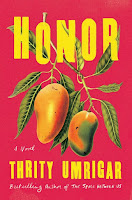
Honor

Honor
Title:
  Honor
Author:  Thrity Umrigar
Publication Information:  Algonquin Books. 2022. 336 pages.
ISBN:  161620995X / 978-1616209957

Book Source:  I received this book through NetGalley and a publisher's blog tour free of cost in exchange for an honest review.

Opening Sentence:  "Her face is a constellation of stars."

Favorite Quote:  "Everywhere she went, it seemed, it was open season on women. Rape, female genital mutilation, bride burnings, domestic abuse - everyone, in every country, women were abused, isolated, silenced, imprisoned, controlled, punished, and killed. Sometimes, it seems to Smita that the history of the world was written in female blood."

***** BLOG TOUR *****


Review

Meena is a young woman. Born and raised in a small village in rural India, Meena grows up under the strict control of her brothers. She and her sister flout tradition by getting paying jobs to help support the families. Her brothers use her earrings but considering her working an insult to them. Meena, a Hindu girl, falls in love with a Muslim man. She is forbidden and then worse to prevent such a union. She marries him anyway. They have a daughter. They name her Abru. "It means Honor."

Meena's brothers exact revenge and, in their eyes, restore their honor by murdering her husband by burning him alive. He dies, and Meena is left permanently scarred. Her courage propels her further. She allows an attorney to file suit against her brothers. "Steel is forged from fire."

Everyone awaits the court's decision. This is the point at which the book begins and the point at which Smita joins the story. She is a reporter. She is of Indian heritage, but her family immigrated to the United States when Smita was young. Being back in India brings back to Smita all the reasons she loved India but all the betrayals and hate that caused her family to leave.

Through the story of these two women both past and present, the book tackles so many issues surrounding even modern day India - poverty, corruption, religious tensions, and, most of all, violence against women. This view is tempered through the depiction of Mohan, who embodies a passion for his homeland and a vision of what it could be.

The story of this book is Smita's story, including her telling of Meena's story and her own role in Meena's story. That is my only regret about this compelling and heartbreaking book. I want this to be Meena's story first and foremost. That is the voice I want to hear for that is the voice the world needs to hear. However, the book begins and ends with Smita.

Smita's story in and of itself is tragic and horrifying, but it is Meena's story that I want to hear more of. Smita's story is of strife between faiths, and times when friends and neighbors betrayed each other in the name of religion. Meena's story is of the strife between two faiths and even more so about the plight of women - women of any faith in a rigid, male dominated society. Smita's story is of a terrifying, horrifying, life altering event as a child, but it is about a way out and life - even a good life - after. Meena's story is about a lifetime of subjugation and abuse with no foreseeable way out. Smita's story is a reflection back on tragedy and the way in which a decision can alter the trajectory of an entire life. Meena's story is an ongoing tragedy. Not to mitigate the trauma in Smita's story, but I am drawn more to Meena's story. The fact that the books begins and ends with Smita highlights that disparity in focus even more starkly.

Nevertheless, both women are memorable characters, and the events described so tragic that the book will stay with me for a long time.

About the Author

Thrity Umrigar is the bestselling author of eight novels, including The Space Between Us, which was a finalist for the PEN/Beyond Margins Award, as well as a memoir and three picture books. Her books have been translated into several languages and published in more than fifteen countries. She is the winner of a Lambda Literary Award and a Seth Rosenberg Award and is Distinguished Professor of English at Case Western Reserve University. A recipient of the Nieman Fellowship to Harvard, she has contributed to the Boston Globe, the Washington Post, the New York Times and Huffington Post.

About the Book

The bestselling author of the PEN/Beyond Margins Award finalist The Space Between Us and eight other critically acclaimed novels that have been published in over fifteen countries, Thrity Umrigar has long been known as an author with “an uncanny ability to look deeply into the human heart and find the absolute truth of our lives” (Luis Alberto Urrea). Now, it is with great excitement that we welcome Umrigar to the Algonquin list with HONOR (Publication Date: January 4th, 2022; $26.95), her ninth novel in a remarkably accomplished career. Returning to subjects that have long haunted her work—the complex relationship between women of different classes, the power of privilege and wealth, and the lively, frenetic energy of Mumbai—Umrigar’s HONOR is a “powerful, important, unforgettable book” (Cheryl Strayed) that shows she is working at the height of her extraordinary talents. As New York Times bestselling author Lisa Wingate says, “In the way A Thousand Splendid Suns told of Afghanistan’s women, Umrigar tells a story of India with the intimacy of one who knows the many facets of a land both modern and ancient... A place where love can sometimes involve the peril of defying convention, and ultimately risking everything for what matters most.”

When a young Hindu woman is brutally tortured for marrying a Muslim man, and her husband murdered, Indian-American journalist Smita travels to India to cover the story of the young widow, Meena, and her attackers—her own brothers, who feel their sister’s forbidden marriage brought unforgivable shame to the family. Returning to Mumbai for the first time in twenty years, Smita sees a country entrenched in outdated beliefs about caste, religion, and patriarchy, a country where a woman can meet violence for exercising any amount of autonomy. But Smita’s harsh assessment of modern India is complicated by Mohan, a lifelong Mumbai resident with progressive ideals and a fierce love of his country who becomes her unofficial partner in her quest to bring awareness to the tragedy. As Smita works for justice on behalf of Meena and her infant daughter, she must also reckon with the privilege she now has as an American—and finally face the trauma that led to her own family fleeing India all those years ago.

“A few years ago, I read a series of articles in the New York Times about the misogyny endured by women in rural India,” says Umrigar, a recipient of the Nieman fellowship at Harvard, a Distinguished Professor of English at Case Western University, and former prize-winning journalist whose writing has appeared in the New York Times, Washington Post, and Boston Globe. “I lived in India until I was 21, but since I was raised in a modern, urban family, some of the ‘traditions’ and rituals I read about—most of which are rooted in iron-clad beliefs about caste and religion and patriarchy—shocked me. I began to conceive of a novel where a woman who exercises basic human rights—the right to employment, to love and marry whoever she chooses—is brutally punished for her courage. I wanted to explore her inner life, the source of such bravery. And then I thought of a second character, one who has had the advantages of wealth and education, but who has also been wounded by the divisions in Indian society. I wanted to see these two women in conversation, to see whether they could inspire and support one another.”

“With HONOR, Thrity Umrigar continues her habit of laying bare the folly of our perceived differences,” says Connie Schultz, author of The Daughters of Erietown. “This an intense and spellbinding novel, ricocheting between fear and hope, and betrayal and redemption. HONOR is the story of the human heart in all of its complexities, and love worth fighting for.


Please share your thoughts and leave a comment. I would love to "talk" to you.